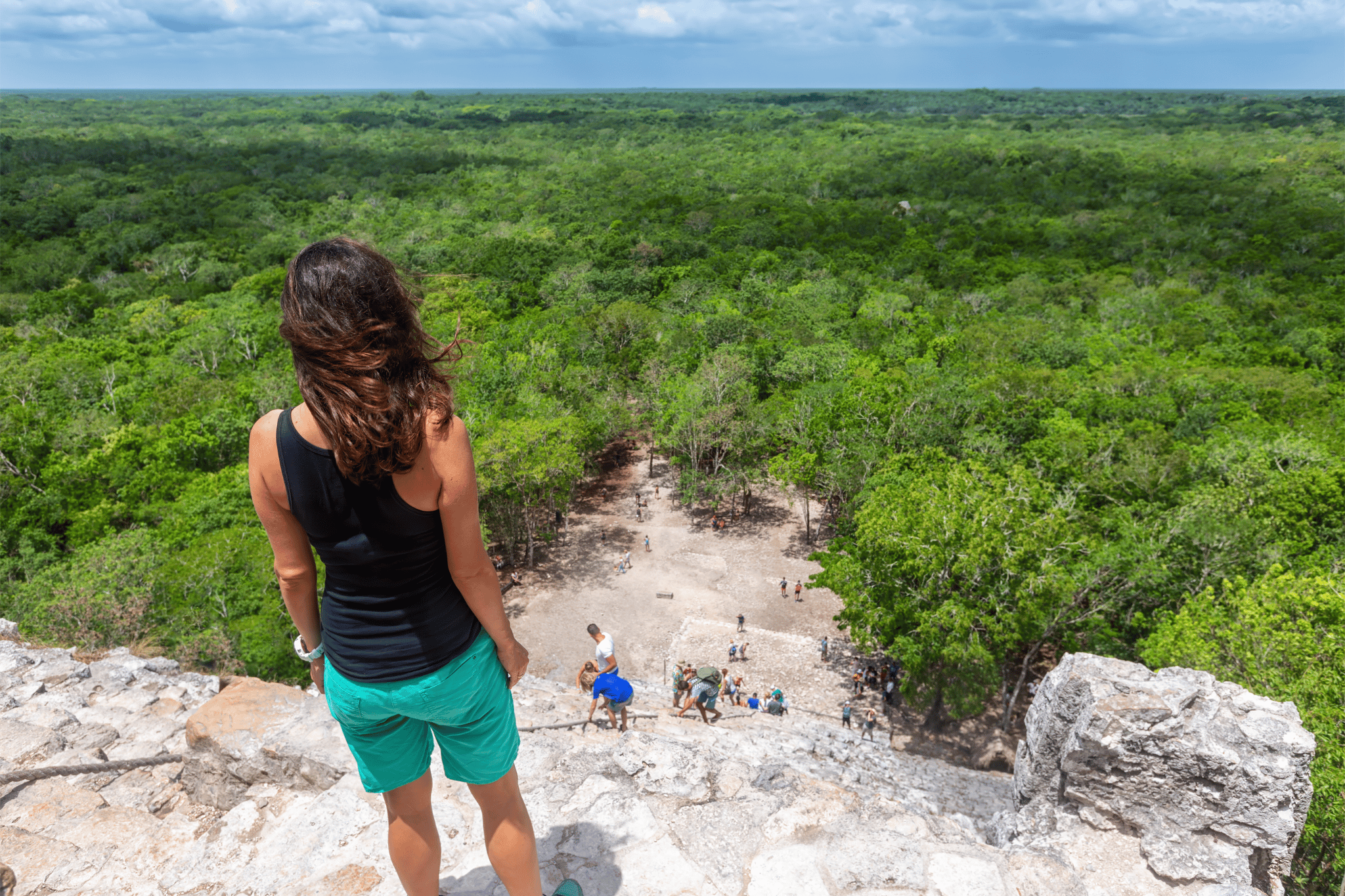
For six years, visitors to Cobá could stand at the base of Nohoch Mul and look up.
Now they can climb it again.
In December 2025, Mexico’s National Institute of Anthropology and History reopened access to the 138 feet high structure after completing a new wooden staircase designed to provide safer access while protecting the archaeological monument. Today, visitors can once again make the ascent to the top of one of the tallest structures in the northern Maya region.
For members staying in Cancun, that makes an already remarkable archaeological site worth another look.
Cobá is an ancient Maya city set among lakes and dense tropical vegetation in Quintana Roo. Unlike archaeological sites where the major monuments are concentrated around a single open plaza, Cobá unfolds through the landscape, with structures connected by an extraordinary network of ancient raised roads known as sacbe’ob.
And at the heart of it stands Nohoch Mul.
The Site and the Scale
Cobá was once one of the most important cities of the northern Maya lowlands.
At its height, the city extended across approximately 27 miles and was connected internally and to other communities by more than 50 raised stone roads. The longest known sacbé from Cobá stretches approximately 62 miles toward Yaxuná, near Chichén Itzá.
That scale is part of what makes visiting Cobá different.
You move through tropical vegetation from one group of structures to another rather than simply walking around a single monumental plaza. Ancient roads, carved stelae, temples, and other structures emerge from the landscape as you explore.
Eventually, you reach the Nohoch Mul group.
And then you look up.
The Climb Is Back
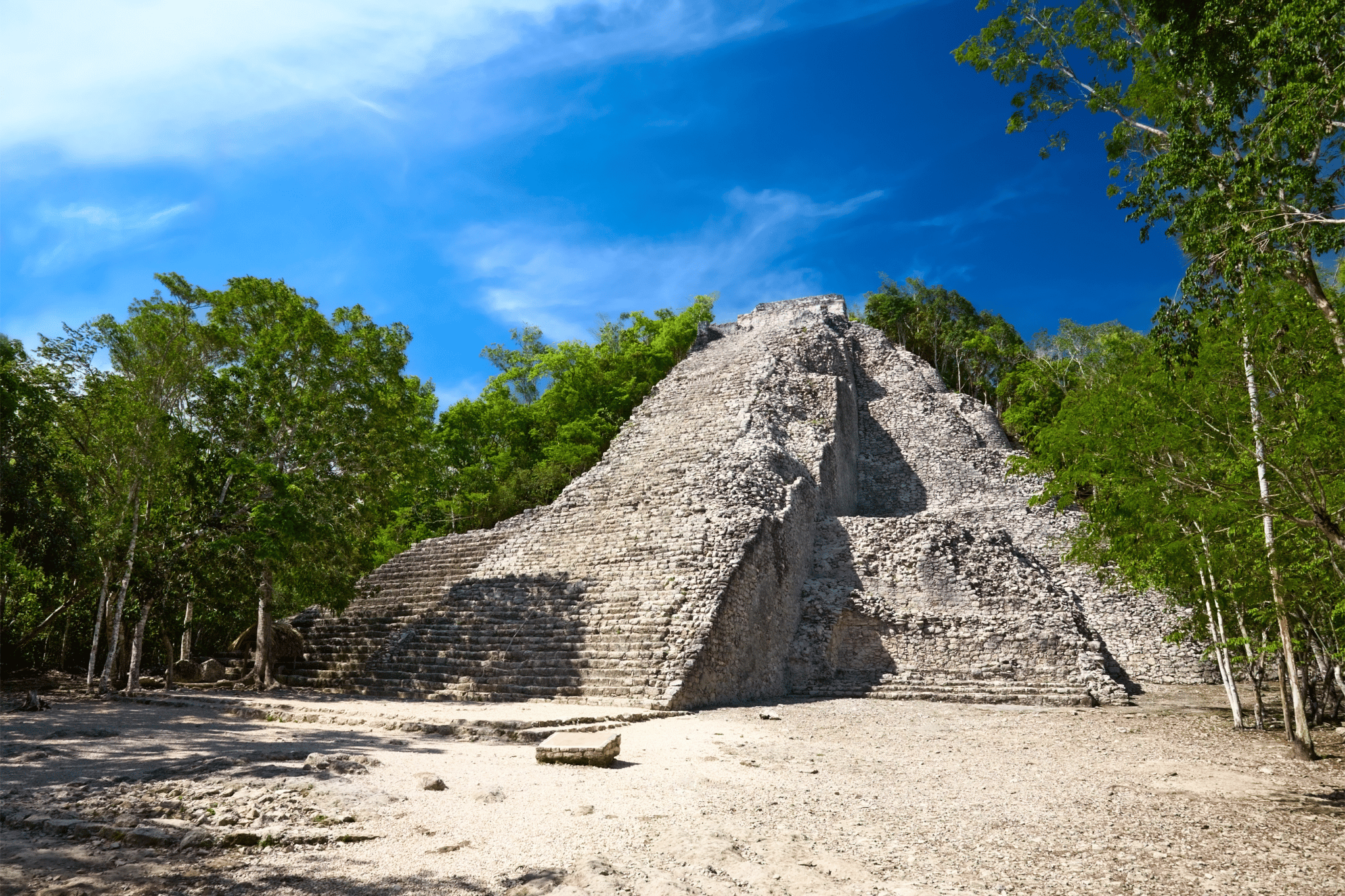
At approximately 138 feet, Nohoch Mul is the tallest structure at Cobá and one of the site’s defining monuments.
After being closed to climbing for six years, access reopened in December 2025 with the inauguration of a new wooden staircase. The structure itself consists of a seven-level base with rounded corners and an upper temple.
The important difference for returning visitors is that this is no longer the old climb up the exposed original stone staircase using a rope down the center.
The new staircase was specifically constructed to provide controlled ascent and descent while helping protect the pre-Hispanic structure.
And access is controlled.
INAH currently permits access to Nohoch Mul, check times before you go, with a maximum of 15 people per group and stays at the top limited to 15 minutes.
That means the reward isn’t a sunset climb, as older descriptions of the experience may suggest.
It’s the view itself.
From the top, the surrounding landscape gives you a completely different perspective on the scale of Cobá and the tropical environment in which this Maya city developed.
More Than One Pyramid
Nohoch Mul may be the headline, but it shouldn’t be the entire reason to visit Cobá.
The city’s network of sacbe’ob is one of its most important archaeological features. These raised roads connected ceremonial, administrative, and residential areas and helped Cobá maintain relationships and exercise influence across a much larger territory.
The site also contains carved monuments and inscriptions that have helped archaeologists reconstruct parts of Cobá’s history.
That is where a knowledgeable guide makes a difference.
Instead of seeing isolated stone structures, you begin to understand them as pieces of a functioning city: roads connecting communities, monuments recording events, architecture reflecting changes over centuries, and a political center that once exercised considerable influence in the Maya world.
The climb gives you the view.
The history gives the view meaning.
Take Your Time
Cobá rewards visitors who don’t treat Nohoch Mul as a finish line.
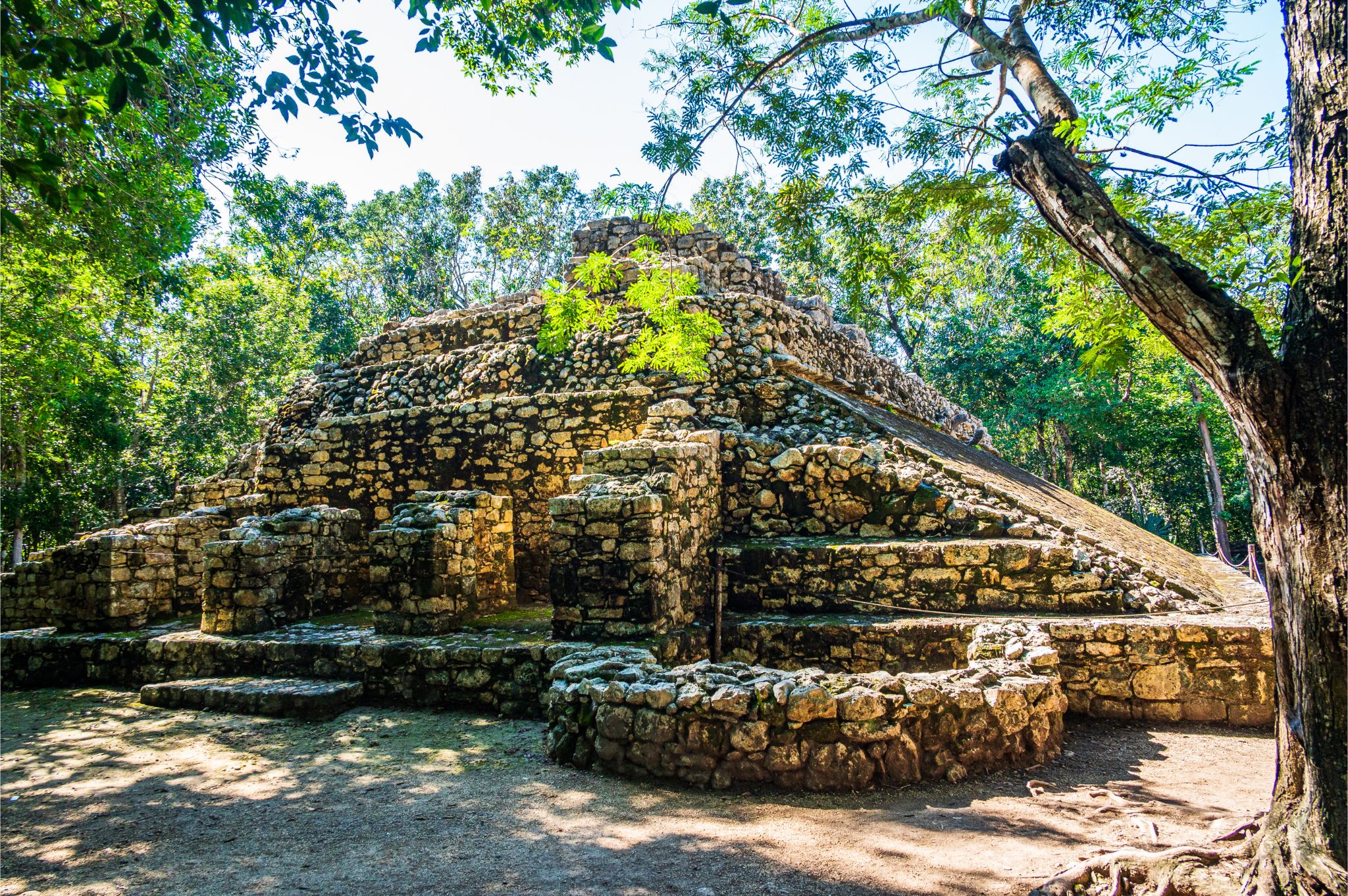
Look at the sacbe’ob beneath you as you move through the site. Spend time with the carved monuments. Notice how completely the tropical landscape surrounds the architecture.
INAH notes that Cobá developed near five lakes that were fundamental to the city’s development and survival, while its extensive road network helped connect it with settlements across the region.
That combination water, roads, architecture, and jungle is part of what made Cobá possible in the first place.
And it is still what makes the site feel different today.
Practical Notes
Hours: The Cobá archaeological zone is currently open daily check for updated times.
Nohoch Mul access: Climbing is currently permitted during select hours. Access is limited to groups of up to 15 people, with up to 15 minutes permitted at the top.
What to wear: Comfortable walking shoes, lightweight clothing, sun protection, and insect repellent are sensible choices for exploring an archaeological site surrounded by tropical vegetation.
Getting there: Cobá is inland from Cancun and reached by road through Quintana Roo. Travel time depends on your resort, transportation, and excursion itinerary.
Book through: Check with the resort activity desk at your resort for current Cobá excursions, transportation, inclusions, schedules, and availability. Because archaeological-site access rules can change, confirm current Nohoch Mul climbing access when booking.
For years, travelers could visit Cobá but could no longer experience one of the things that had made the site famous.
Now they can.
Walk the ancient roads. Explore a Maya city that once stretched across an enormous landscape. Stand beneath a pyramid rising above the tropical vegetation.
Sometimes the most memorable view of an ancient place is not from the top. It is realizing how much is still there to discover.